Second Language Learning for Individuals with Down Syndrome
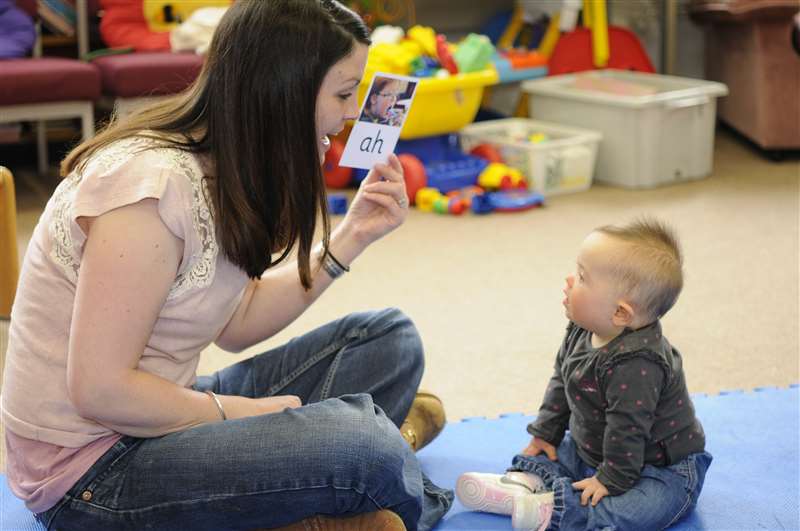
Before I had children, as a youthful and energetic French Drenching educator beginning, I used to accept that the French submersion program and second language learning was for everybody — with the exemption being, maybe, assuming the kid had some kind of language delay.
A few of my partners accepted that a kid needing extra help ought not be getting guidance in a subsequent language. I hadn't considered second language advancing as an honor, yet thinking back now I see that is what it was: an honor simply stood to specific youngsters.
Enter Elyse. Becoming the parent of a kid who might encounter language defers constrained me to challenge my own suppositions. From the time I accepted her pre-birth conclusion, I thought — and truth be told, stressed — over what Down disorder would mean for her future schooling.
Could
she go to a similar school as her elder sibling? Was a French submersion
program possible for a kid with Down condition? Did learning a subsequent
language seem OK for a youngster with mental, formative, and correspondence
delays?
My own encounters with second language learning and the advantages of bilingualism up to that point had been broad. Subsequent to going through a French submersion program as a kid, I had the option to concentrate on French in college, live and learn Spanish Mexico work in a French people group, meet a French sweetheart, secure some work, be consulted by CBC Radio in French, and participate in significant discussions while experiencing French speakers all over the planet.
The advantages of second language learning are legitimate and upheld by research. Learning a subsequent language assists with creating critical thinking abilities, decisive reasoning and listening abilities, as well as further developing memory, focus, and our capacity to perform various tasks.
Youngsters who are capable in different dialects give indications of upgraded imagination, mental adaptability, and scholastic accomplishment.
In any case, maybe in particular, learning a subsequent language assists youngsters with creating uplifting perspectives, compassion, and understanding for different societies, and encourages social responsiveness and resistance.
Second language learning assists youngsters with fostering an oddity about the world and become worldwide residents.
Kids who become familiar with one more language before the age of five utilize a similar piece of their cerebrum to get a second language that they use to get familiar with their native language. I was unable to consider a valid justification why Elyse shouldn't learn French.
Is there any good reason why she shouldn't have the honor of learning a subsequent language? The very honor that I had, that her father and more distant family had, and that her sisters could have? I needed to recognize that maybe it was just assumptions — my own, and cultural — that could hold her back.
We chose
to let it all out.
A year prior Elyse was qualified to be enrolled for school, I met with our nearby French Drenching school. I had one straightforward inquiry.
What supports are accessible in the French Submersion program
for a youngster with Down condition?" I met with the school's asset
educator whose work it is to guarantee every understudy has the backings they
need.
"That is a decent inquiry," the asset educator expressed, as in, who can say for sure? That was not the response I was searching for. I came to comprehend that maybe French Submersion programs being "first class" or for a specific kind of student actually held ground and that there remains work to be finished and generalizations to be separated.
Maybe certain educational committees, similar to me before I did all
necessary investigation, presently couldn't seem to receive the message that
subsequent language learning is for everybody.
While the endowment of having the option to communicate in two dialects is great, the conceivable medical advantages are considerably more pleasant.
As I suggested before, there might be deep rooted medical advantages for second language students, particularly for people with Down disorder who have a higher rate of fostering Alzheimer's dementia.
Alzheimer's is an ever-evolving infection that starts with gentle cognitive decline and can truly influence an individual's capacity to complete day to day exercises. As the most widely recognized sort of dementia, Alzheimer's includes portions of the cerebrum that control thought, memory, and language.


Comments
Post a Comment